What Happens When Nobody Remembers the Enemy?
Why is iodine added to table salt? That random question led me from goiters to polio, MMR vaccines, water fluoridation and a larger question:
What happens when we win a war so thoroughly that nobody remembers the enemy?
What If His Name Were José Altuve?
When ICE detained Venezuelan baseball coach Oswaldo Pirela, DHS declared that “no one is above the law.” Pirela isn’t José Altuve.
But, that’s precisely the point.
An ICE detention involving a Venezuelan baseball coach raises uncomfortable questions about immigration, humanity, government power, and why we care differently when the person involved is someone we already consider one of us.

Someone Had to Let Trump onto the Field
Donald Trump has never encountered a stage he didn’t want to occupy. But getting onto the stage requires someone to open the door.
The relationship between Trump and FIFA president Gianni Infantino offers a revealing lesson about power, institutional responsibility and what happens when institutions finally decide to say no.
Your Dog Isn’t on the Ballot: Why Independent Journalism Matters
The best political journalists are not trying to defeat candidates.
They are trying to keep unsupported claims, convenient contradictions and political propaganda from reaching the public unchallenged.
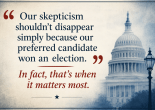
When Skepticism Picks a Favorite
The tragic shooting of Johan Sebastián Guerrero prompted difficult questions about transparency and accountability. But it also led me to ask a larger question: Why do so many people who once distrusted government now seem willing to trust it when their preferred leader is in charge?

The Questions We Stop Asking
Watching The Godfather reminded me that our lives may be shaped less by the answers we defend than by the questions we continue to ask.
Growth begins when we refuse to let curiosity die.
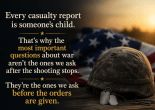
Before the Orders Are Given
A military awards ceremony became something far more personal when I realized the young soldier in the video would never come home. A reflection on service, sacrifice, and accountability.
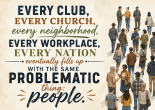
Can a Culture Survive on Trust Alone?
Can a society thrive on trust alone?
After watching a vintage episode of TV show ‘To Tell the Truth’ featuring the founders of a community called Auroville, I found myself reflecting on culture, human nature, and the realization that every community eventually becomes a reflection of the people who inhabit it.
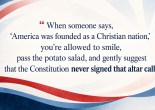
Happy 4th: “Christian Nation” and Other Fairy Tales
If early America could call itself a “Christian nation,” it’s partly because Native religions were erased, enslaved Africans weren’t counted as fully human, and Muslims, Hindus, and others were kept an ocean away.
New on the blog: “Christian Nation” And Other July 4 Bedtime Stories—a wry, pointed look at founding documents, Deists, Baptists, and why the Constitution never made “Christian nation” our official status.


Handing the Keys to Aviva’s Generation
Sometimes the most meaningful questions begin in the most ordinary places. A Facebook ad for laundry detergent prompted me to think about stewardship — not just of money, but of the world we’ll eventually hand over to our grandchildren. This isn’t a post about detergent. It’s about legacy.