
Randomly Rudimentary Life Stuff
Learning to live authentically, and not settling for substitutes or counterfeits, and sharing those thoughts
When Intimidation Stops Working
By LONNIE KING
The recent political infighting among Republicans in Indiana caught my attention for reasons that go beyond redistricting maps or spats between party factions.
Donald Trump and his allies reportedly targeted Republican state legislators who refused to support a Trump-backed redistricting effort. Some lawmakers faced primary challengers. Millions were spent trying to punish dissent.
The message was unmistakable: get in line or pay the price.

And yet, something interesting happened. Not everyone got in line.
That doesn’t mean Trump has lost his influence. He clearly still holds enormous sway within the Republican Party. But the Indiana situation felt revealing because it hinted at something power brokers rarely want people to notice:
Intimidation only works as long as people believe the threat matters.
The Psychology of Fear
Fear depends heavily on perception.
Most intimidation never has to become explicit because people internalize the consequences ahead of time. They censor themselves. They comply preemptively. They convince themselves resistance is hopeless.
That’s true in politics. It’s true in religion. It’s true in workplaces, families, and personal relationships.
The threat often becomes self-sustaining because people stop testing whether the consequences are actually as absolute as they’ve been told.
But eventually, sometimes quietly and almost imperceptibly, people begin asking a dangerous question: “What if the punishment isn’t worse than surrender?”
That question changes everything—because once people stop believing the intimidator is all-powerful, the dynamic itself begins to shift.
The Moment the Mask Slips
Ironically, the clearest sign that intimidation is weakening is often the reaction of the intimidator himself.
When fear stops producing automatic obedience, the person relying on intimidation frequently becomes louder, more reactive, more personal, more vindictive and sometimes visibly irrational.
Why?
Because intimidation is, at its core, a confidence game. It depends on maintaining the appearance of inevitability.
The moment resistance survives — even in small doses — the mystique begins to crack. And once that happens, the strongman often starts revealing something he worked very hard to conceal:
insecurity.
The untouchable figure suddenly looks rattled. The dominant personality suddenly looks aggrieved. The person who projected strength begins lashing out in ways that feel petty, childish or emotionally unstable.
Ironically, the overreaction itself can accelerate the erosion.
This Isn’t Just About Politics
What fascinates me about this dynamic is that it shows up everywhere.
You see it in controlling religious environments where questioning authority is treated like rebellion against God. You see it in toxic workplaces where leadership depends more on fear than trust. You see it in unhealthy relationships where one person maintains control by convincing the other that independence will lead to disaster.
The formula is almost always the same:
- create fear
- reinforce consequences
- isolate dissent
- maintain the illusion that resistance is futile
And for a while, it often works…until people begin realizing the threat may not actually be as absolute as they were taught to believe.
The Weakness of Intimidation
Intimidation has one major weakness: it cannot survive widespread realization. The moment enough people discover they can survive the backlash, the machinery begins to wobble.
Not necessarily collapse overnight. But it will begin to get shaky.
And when that happens, the intimidator often reveals something unexpected: the anger was never proof of strength. It was evidence that the leverage was slipping.
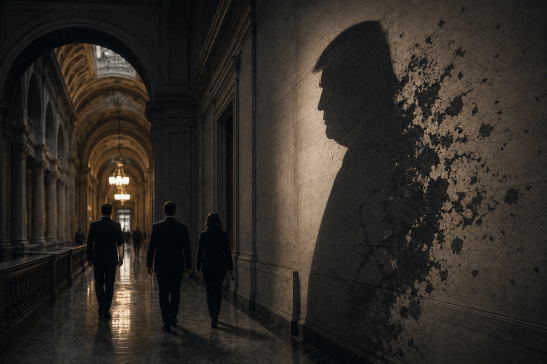
That’s what makes moments like Indiana politically fascinating to me. Not because they signal some immediate collapse of Trump’s influence. I doubt they do, at least among his core support group.
But because they may hint at the beginning of something more subtle: people inside the system starting to wonder whether fear still deserves the same obedience it once commanded.
History suggests that’s often where change begins—quietly, locally and almost invisibly at first.
But it always happens right around the moment people stop assuming the intimidator can destroy everyone who says no.
Grace and grit to you! —LK

