
Randomly Rudimentary Life Stuff
Learning to live authentically, and not settling for substitutes or counterfeits, and sharing those thoughts
More Than a Membership Card
By LONNIE KING
Every once in a while, I hear someone from inside modern evangelical Christianity say something that makes me stop and think, “Maybe I’m not crazy after all.”
Recently, I listened to a reel by Christian preacher Ray Waters talking about transgender athletes, fear-based political messaging, and the way vulnerable people become useful scapegoats during election cycles. What struck me wasn’t simply his position on the issue itself. It was the fact that he was willing to say it out loud from inside a religious culture where saying something like that can cost you influence, approval, and belonging.
And honestly, that mattered to me.
Not because hearing him suddenly makes me want to run back into evangelical culture. It doesn’t. But because institutions rarely change entirely from outside criticism. Sometimes it takes people inside the system asking difficult questions about whether the institution still resembles the values it claims to represent.
Honestly, I think that’s true everywhere. Enron likely would not have unraveled as quickly as it did without internal whistleblowers willing to challenge the culture from the inside. Outside observers can suspect problems, but insiders understand how the machinery works and they are often the ones best positioned to expose when the machinery has drifted from its stated purpose.
That’s part of why voices like Ray Waters catch my attention. Not because I suddenly want back into the institution, but because meaningful change often begins when somebody inside is willing to risk friction with the tribe.
When Faith Becomes a Tribe
One of the loneliest feelings in the world is realizing you no longer fully recognize the culture you once considered home.
Part of what made Ray Waters’ comments resonate with me is that I have spent years feeling increasingly disconnected from the way many churches in America now seem to function. Christianity often feels less like a spiritual path and more like a political and cultural identity marker.
And once faith becomes tribal identity, the incentives change. The focus slowly shifts toward protecting the group, defending the brand, preserving influence, maintaining ideological purity and identifying who belongs and who doesn’t.
Disagreement starts feeling less like honest wrestling and more like betrayal. Meanwhile, vulnerable people can become symbols instead of human beings.
Useful Scapegoats
The issue of transgender athletes especially caught my attention because I follow sports closely enough to know the actual reported numbers involved are extraordinarily small.
And even those numbers are difficult to measure precisely. There is no comprehensive national registry of transgender athletes, and many people may never publicly identify themselves for personal, social, or safety reasons. Some simply live quietly without drawing attention to themselves at all.
That doesn’t mean every question about fairness in sports is hateful or illegitimate. Competitive issues can become complicated. I understand why people wrestle with them. But what unsettles me is the sheer scale of the outrage compared to the apparent size of the population being discussed.
These are often teenagers. Vulnerable kids. Human beings already statistically more likely to experience isolation, bullying, anxiety, and rejection. Yet they have become central characters in political ads, culture-war sermons, fundraising appeals, and outrage cycles.
At some point, followers of Jesus should at least pause long enough to ask:
“Why are we this emotionally invested in fearing people who make up such a tiny percentage of the population?”
And that question becomes even harder for me when I look at the Jesus described in the Gospels. He consistently moved toward vulnerable people, not away from them.
Christianity Was Never Supposed to Be a Club
The more I think about it, the more I believe one of the biggest shifts in modern Christianity is that we quietly turned it into membership culture.
Christianity became something people joined instead of something people practiced.
As far as I can tell, the New Testament never presents baptism as initiation into a political tribe or institutional club. Baptism symbolized transformation. Surrender. Participation in a different way of living.
Somewhere along the line, many churches turned it into onboarding.
“You now belong to us.”
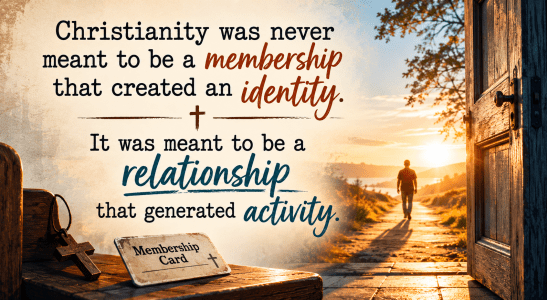
But I don’t think that was ever supposed to be the point. Christianity was never meant to be a membership that created an identity. It was meant to be a relationship that generated activity.
Love God. Love others. Care for people. Practice mercy. Show humility. Move toward suffering instead of exploiting it.
That was the activity.
The Influence Economy of Modern Faith
Part of what troubles me is that tribal signaling often seems tied to self-promotion. That may sound cynical, but I think it is difficult to ignore.
Modern religious culture increasingly rewards people for reassuring the tribe: reinforcing fear, attacking the approved enemies, defending political identity and feeding outrage back into the system.
And when influence, speaking opportunities, book sales, podcast downloads, or institutional advancement become connected to tribal loyalty, there is tremendous pressure to keep giving audiences what they already want to hear.
That doesn’t mean every Christian leader is consciously manipulative. I don’t believe that. But I do believe systems shape people. And systems built around identity preservation often struggle to prioritize compassion over applause. Which is why someone willing to publicly challenge the tribe from inside it catches my attention.
Why I Turned in My Membership Card
The truth is, it’s not the principles and teachings of Jesus I feel like I walked away from. If anything, those teachings are part of what made this tension impossible for me to ignore in the first place.
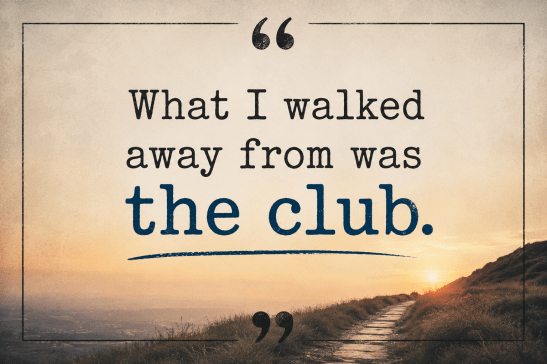
What I walked away from was the club.
The version of faith that treats belonging as more important than compassion. The version that confuses political identity with spiritual maturity. The version that protects the tribe even when vulnerable people get crushed underneath it.
I couldn’t keep pretending those things were the same.
And maybe that’s why hearing someone from inside the institution publicly ask whether vulnerable people are being scapegoated still affects me emotionally. Because despite everything, I still think Christianity is supposed to produce people who love courageously enough to stand beside human beings who are afraid.
Not people who make them more afraid.
Grace and grit to you! —LK

