
Randomly Rudimentary Life Stuff
Learning to live authentically, and not settling for substitutes or counterfeits, and sharing those thoughts
What If His Name Were José Altuve?
By LONNIE KING
I stumbled across a sports story last week that really isn’t a sports story at all.
Oswaldo Pirela is a 34-year-old Venezuelan who works as a minor-league catching coordinator for the San Diego Padres. Two weekends ago, he was detained by ICE at the airport in El Paso while returning home to Arizona from a work assignment with the Padres’ Triple-A affiliate.
Pirela isn’t a major-league star. In fact, he never reached the major leagues as a player. He spent some time in the Texas Rangers’ minor-league system and eventually made a career for himself on the other side of the game.
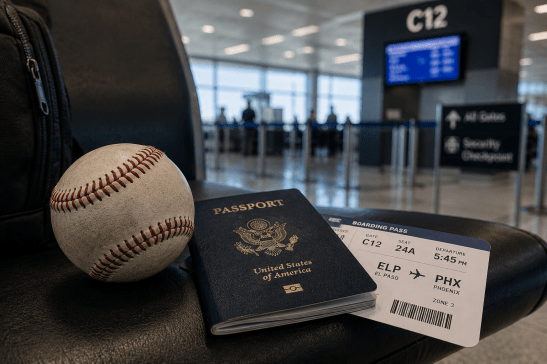
He’s the kind of baseball lifer whose name most fans would never know. Except, thanks to the current political climate in the USA, now we do.
According to the Department of Homeland Security, Pirela entered the United States legally in 2014 but overstayed his authorized period of admission, which expired in 2018.
His family tells more of the story.
They say Pirela subsequently applied for asylum, that his case remains pending, and that he has repeatedly renewed his authorization to work in this country. His family has produced an employment authorization card issued by the federal government in 2024 and valid through 2029.
He has a wife. He has two daughters who are American citizens. He has a job with a Major League Baseball organization. And while returning home from doing that job, he was detained by the federal government.
None of those facts necessarily means Pirela has a legal right to remain permanently in the United States. I don’t pretend that it does.
Work authorization is not the same thing as lawful immigration status. A pending asylum claim does not automatically prevent the government from initiating removal proceedings. Immigration law is complicated, and there may still be facts about Pirela’s particular case that haven’t become public.
But DHS decided to explain its position with a sentence that caught my attention: “No one is above the law.”
Well…since you brought it up…
Let’s Talk About Being Above the Law
Donald Trump has been convicted by a jury on 34 felony counts in New York. Separately, a federal jury found him liable for sexually abusing and defaming E. Jean Carroll. Another jury subsequently awarded Carroll additional damages for defamation.
Trump appealed. He lost. He asked the United States Supreme Court to intervene. The Court declined and has now rejected his request to reconsider that decision.
Those are separate cases, one criminal and the others civil. I don’t conflate them.
But apparently the Department of Homeland Security would like us to discuss the broader principle that nobody is above the law.
So let’s discuss it.
Pirela’s alleged immigration violation is not equivalent to Trump’s 34 felony convictions. In fact, overstaying an authorized period of admission is generally a civil immigration violation, not a criminal offense. And yet Pirela is the guy sitting in federal detention while DHS solemnly reminds the rest of us that nobody is above the law.
There is an irony there that apparently escaped whoever approved that statement.
But there’s a bigger issue than Donald Trump, and frankly, it’s the part of this story I find more troubling.
What Were the Padres Supposed to Do?
Professional baseball doesn’t occasionally encounter foreign-born employees. It depends upon them.
Major League Baseball organizations have spent decades developing an enormous infrastructure throughout Latin America. They operate academies. They sign teenagers from the Dominican Republic and Venezuela. They employ international scouts, coaches, instructors and support personnel.
Handling immigration and employment documentation isn’t some exotic problem that suddenly landed on the San Diego Padres’ desk. It’s part of doing business in professional baseball.
So, let’s consider this from the Padres’ perspective. One of your employees reportedly possesses a federal employment authorization document valid through 2029.
You employ him. You send him to El Paso on company business. He finishes his assignment and heads home. And then the federal government detains him.
I don’t know enough about the Padres’ internal procedures to declare that they did everything perfectly, and I’m not going to pretend that I do. But if I’m an employer who routinely employs people from other countries, Pirela’s detention gets my attention. Because what exactly am I supposed to rely upon?
One part of the United States government has given my employee documentation authorizing him to work until 2029. Another part of the United States government says he can be detained and removed in 2026.
Maybe immigration law provides a perfectly legitimate legal explanation for that apparent contradiction. But from an employer’s perspective, that’s one hell of a way to run a railroad. And if I’m running another Major League Baseball organization, I’m probably asking my attorneys a question this week:
Could this happen to one of our people?
Which brings this story home for me. Literally.
What If His Name Were José Altuve?
Pirela is Venezuelan. As a Houston Astros fan, I couldn’t read that without thinking about José Altuve.
Let me be very clear before somebody misunderstands the comparison. I am not suggesting Altuve and Pirela have similar immigration circumstances. I have no reason to believe that they do.
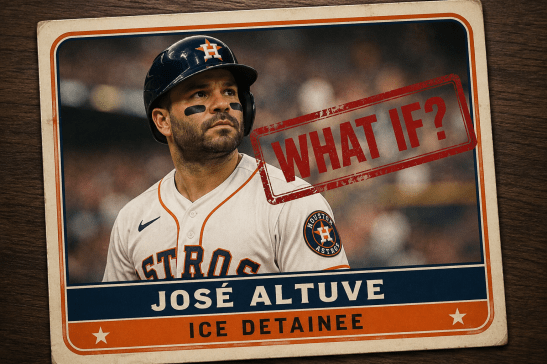
Altuve is one of the most recognizable international athletes in America, and I would imagine the Astros and his representatives have every piece of necessary documentation checked, double-checked and probably stored somewhere in triplicate.
Major-league teams also travel by charter, so Altuve isn’t standing in the same airport security line Pirela encountered.
But, that’s not the point. Just change the name in the headline. “Astros legend José Altuve detained by ICE.”
Houston would lose its collective mind. Sports radio would talk about nothing else. Astros fans would have questions that demand answers.
- Where is José?
- Why was he detained?
- What documentation does he have?
- What is his immigration status?
- What law did he violate?
- Does he have a hearing?
- Where is his family?
- When is he coming home?
People who have never spent fifteen minutes thinking seriously about the intricacies of American immigration law would suddenly become intensely interested in due process. And I suspect very few people in Houston would be satisfied with the DHS response:
“No one is above the law.”
We’d want to know the rest of the story. Because José Altuve isn’t an immigration category to us. He’s José. We’ve watched him grow up.
We’ve watched him win batting titles and an MVP award. We’ve watched him celebrate championships. We’ve watched him get booed in every ballpark in America and come home to a city that still adores him.
He’s one of ours. And maybe that’s the uncomfortable lesson Oswaldo Pirela has for the rest of us.
When Does an Immigrant Become a Person?
DHS can call Pirela a “Venezuelan illegal alien.” Technically, the government may have a legal basis for describing his immigration status that way. But those three words do something else.
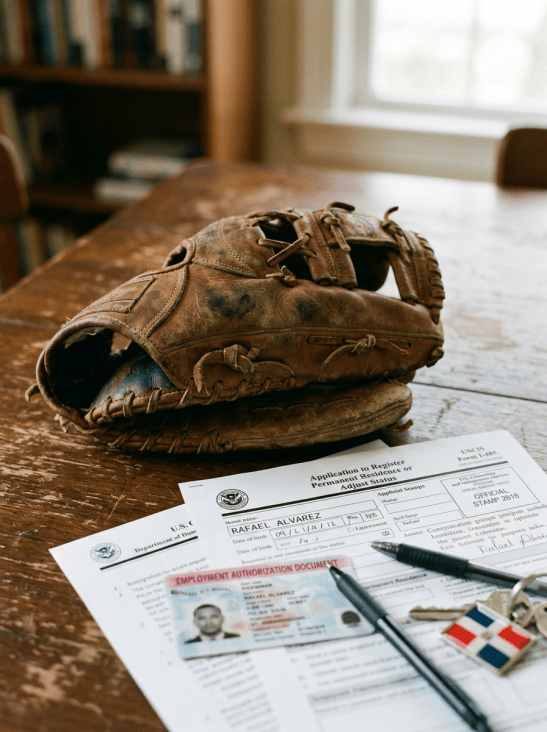
They turn a person into a category.
“Illegal alien” doesn’t have a wife. It doesn’t have two daughters. It doesn’t have coworkers. It doesn’t have a baseball career.
It doesn’t have an employer expecting it back at work. It doesn’t have an asylum application working its way through an impossibly complicated immigration system.
But, Oswaldo Pirela does. And once we know his name and his story, the situation gets more complicated.
That’s why I keep coming back to Altuve. The circumstances aren’t the same. The legal status almost certainly isn’t the same. Their baseball careers certainly aren’t the same.
But their humanity is.
If the Venezuelan baseball man sitting in an ICE detention facility were José Altuve, we’d insist upon hearing every detail of his story before deciding what should happen to him. Why shouldn’t Oswaldo Pirela receive the same consideration?
Not necessarily the same immigration outcome…but the same consideration.
Maybe after hearing all the facts, the law ultimately requires Pirela to leave the country. I don’t know. But enforcing immigration law and exercising government power without discretion, proportionality or humanity are not necessarily the same thing.
Our legal system recognizes that distinction everywhere else.
We have fines. Probation. Appeals. Prosecutorial discretion. Civil penalties. Judicial discretion. Pardons. Different sentences for different circumstances. We don’t ordinarily believe every violation of every law requires the maximum exercise of government power.
Until, apparently, we’re talking about immigration. Then suddenly nuance becomes weakness. Context becomes excuse-making. And a man with a wife, two American daughters, a job and federal authorization to perform that job can disappear into detention while the government congratulates itself:
No one is above the law. Maybe DHS is right about that principle. I hope it is.
But historically, “no one is above the law” has been a warning directed toward powerful people—kings, presidents, government officials or people whose wealth, position or influence might otherwise insulate them from consequences.
It wasn’t supposed to be a boast about how efficiently the government can exercise its power against somebody who doesn’t have much power at all.
Donald Trump’s Department of Homeland Security chose Oswaldo Pirela’s detention as an occasion to remind America that nobody is above the law. Fine. Then let’s remember the whole principle:
Nobody should be above the law. But nobody should be beneath its humanity either.

