
Randomly Rudimentary Life Stuff
Learning to live authentically, and not settling for substitutes or counterfeits, and sharing those thoughts
Album in the Key of Me: Breakfast in America
By LONNIE KING
I have written before about “Songs in the Key of Me,” songs that somehow became attached to particular times, people or chapters of my life.
But apparently there are albums in the key of me, too.
I discovered that almost accidentally.
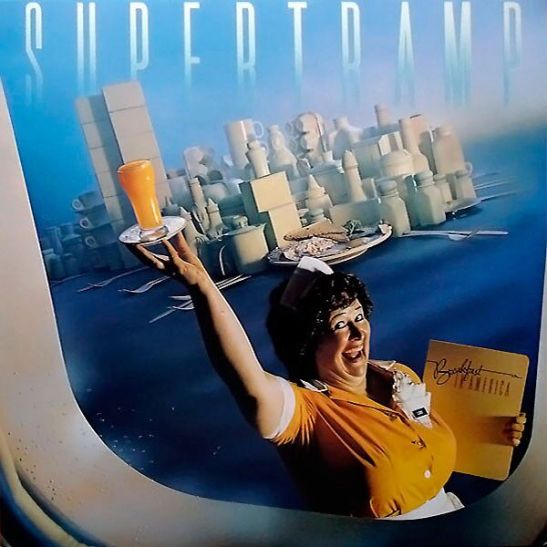
Recently, I stumbled across a YouTube video of someone listening to Supertramp’s Breakfast in America for the first time. I have always enjoyed those reaction videos, especially when someone discovers music that was part of the soundtrack of my younger years.
I knew this album well. I bought it when I was in high school. “The Logical Song” was a favorite. “Take the Long Way Home” remains one of my favorite songs ever.
But then the opening strains of another song began: “Lord Is It Mine.”
And suddenly I remembered. Not just the song. I remembered how the song made me feel when I was about 18 years old.
Music From the Other Side
A few years earlier, I had attended a summer church camp with hundreds of other teenagers.
Among the things we were taught that week was the danger of secular music. And “danger” isn’t an exaggeration.
The message, at least as this young teenager understood it, was that the world of popular music was controlled by the devil. Sacred music pointed us toward God and godly things. Secular music appealed to ourselves and the world and could ultimately lead us away from God.
Those were the categories. And I had a problem because I loved popular music. I loved hearing songs on the radio. I loved discovering new artists. I loved the sounds, the lyrics and the emotions music could create.
And sometimes I felt guilty about loving it.
If the people teaching me about God were right, what did it say about me that I enjoyed something I was being told a faithful Christian shouldn’t want?
Then, a few years later, I bought Breakfast in America and the categories started getting a little messier.
This Sounds Like a Prayer
I don’t want to pretend that “Lord Is It Mine” has been part of some 45-year spiritual meditation for me. It hasn’t.
Until that YouTube video brought it back, I probably hadn’t listened closely to the song in 25 or 30 years.
But when I heard those opening notes, I remembered almost immediately what had fascinated and confused me about it—it sounded like a prayer.
That didn’t make sense.
This was Supertramp. This was a secular rock album. These were exactly the kinds of musicians who supposedly inhabited that other musical world I had been warned about.
Yet here was Roger Hodgson seemingly talking to God. Not singing a hymn about God. Not preaching to anybody about God. Talking to Him, and rather casually, at that.
That was another thing I wasn’t accustomed to.
Prayer in the religious world I grew up in had a recognizable vocabulary and structure. There were ways you talked to God. There was a reverence to it, and sometimes even a formality.
Hodgson sounded like a guy who just needed to talk. He was lonely. He was weary. He saw pain and cruelty around him. He wanted peace. He wanted reassurance. And he asked: Lord, is it mine?
I remember wondering whether I was hearing what I thought I was hearing. All these years later, I discovered that I was.
Hodgson has described “Lord Is It Mine” as a prayer. He was also going through his own period of spiritual searching when he wrote many of these songs. That fascinates me now.
At 18, I was listening to a man only about a decade older than me who didn’t necessarily have the answers either. He was searching.
Watch What You Say
Then there was “The Logical Song.”
Even as a teenager, one particular part of that song stuck with me: the warning to watch what you say because people might start calling you things: a radical, a liberal.
There was absolutely nothing about 18-year-old me that would have had the courage to identify as either, but I understood the warning.
Say the wrong thing. Ask the wrong question. Challenge something everybody around you seems to accept. And suddenly there is a label for you. Once the label is attached, nobody necessarily has to wrestle with what you said anymore. They already know what kind of person you are.
I couldn’t have articulated that when I was 18, but apparently something in me recognized it.
Tell Me Who I Am
The title track was absolutely the musing of someone who was searching for validation and personal significance, but also seemingly resigned to the fact that he is a bit of a prisoner to the character and universe that he has had a hand in creating.
Maybe having breakfast in America will fix things, maybe it won’t. Either way, the imposter syndrome is strong in this one and the writer implies the key to becoming the person he wants to be is somewhere out there.
Playing a Part in a Picture Show
And then there is “Take the Long Way Home,” the one that never really disappeared for me.
Does it feel that your life’s become a catastrophe?
Oh, it has to be
For you to grow, boy.
When you look through the years and see what you could have been,
Oh, what you might have been,
If you’d’ve had more time
The writing is impeccable. The mental imagery that the lyrics create lasts. And the ponderings they induce are powerful.
There is something haunting about the idea of playing a role for the people watching while knowing there is another person underneath the performance, and then getting to a point in life where you don’t know if you have time to undo everything you’ve done wrong.
Who are you when nobody is applauding? Who are you when you get home? How much of the person everybody knows is actually you, and how much is the part you’ve learned to play?
So, when the day comes to settle down,
Who’s to blame if you’re not around?
I certainly wasn’t asking those questions in those words as a teenager. But I loved that song. And now I wonder whether sometimes we recognize our questions long before we know how to ask them.
An Album in the Key of Me
Listening again all these years later, I hear these three songs differently.
- “The Logical Song” asks me what happens when other people start defining who I’m supposed to be.
- “Take the Long Way Home” makes me wonder about the distance between the person we present to the world and the person we actually are.
- And “Lord Is It Mine” strips away the performance altogether and leaves someone alone, talking to God and asking for something he desperately hopes is real.
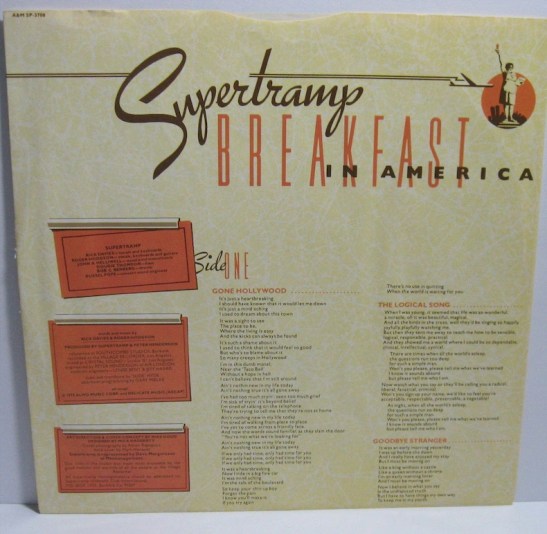
Maybe that’s why Breakfast in America affected me as much as it did. Roger Hodgson wasn’t handing me answers. He was asking questions and some of them were questions I would spend much of my own life asking.
And here’s the funny thing: I’m 65 now, and I’m not sure I have much more certainty about some of those questions than I did when I was 18. But, what has changed is that the questions don’t frighten me nearly as much anymore.
Neither does talking honestly to God about them.
I’ve stated here before, but I’ve come to believe that if God is really God, He doesn’t need me to protect Him from my questions. I don’t have to clean them up first. I don’t have to use the right vocabulary. I don’t have to pretend certainty I don’t possess.
I can just talk.
Maybe that is one of the things Roger Hodgson was showing me in “Lord Is It Mine,” although neither one of us knew each other existed. And maybe the line I was taught between sacred and secular wasn’t nearly as impermeable as I once believed.
I had been taught that secular music could lead me away from God. Nobody had prepared me for the possibility that a secular song might make me want to talk to Him.
Nearly half a century later, I stumbled across a stranger on YouTube hearing Breakfast in America for the first time. And in the process, I heard part of it again for what felt like the first time.
I didn’t just rediscover a song I had forgotten. I rediscovered a question I had forgotten I once asked. And I still don’t know all the answers. I’m just not afraid of the questions anymore.
Maybe that’s what makes Breakfast in America more than an album I loved when I was young.
Maybe it’s an album in the key of me.
Check out the 53-minute video that inspired this post here.
 Randomly Rudimentary Life Stuff