
Randomly Rudimentary Life Stuff
Learning to live authentically, and not settling for substitutes or counterfeits, and sharing those thoughts
When Does Ridiculous Become Dangerous?
By LONNIE KING
Some things are funny right up until they aren’t.
That thought has been rattling around in my head lately while watching modern political culture drift further into authoritarian absurdity, personality worship, and cruelty disguised as strength.
Satire still matters. Mockery still matters. Authoritarian personalities often depend on spectacle, intimidation, and the illusion that they are untouchable. Humor punctures that illusion.
But history also suggests something uncomfortable:
Movements that eventually become dangerous often look ridiculous first.
That line of thought led me this week to the story of Sophie Scholl.
The Lesson of the White Rose Movement
Sophie Scholl was a 21-year-old German university student executed by guillotine in 1943 for distributing anti-Nazi leaflets alongside her brother Hans and other members of a resistance group called the White Rose.
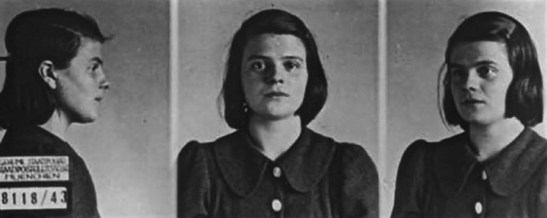
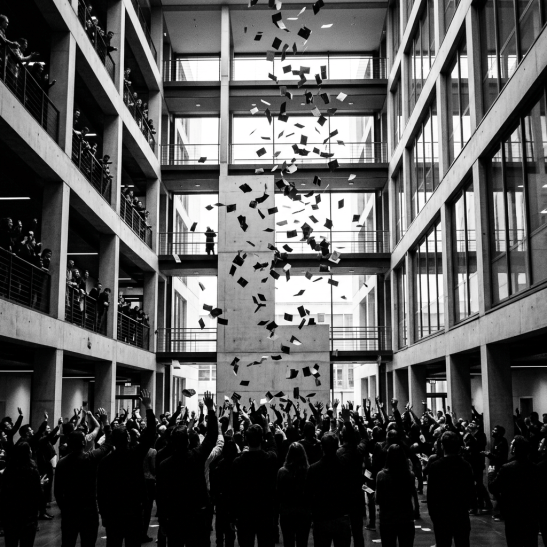
They were arrested after scattering pamphlets throughout the University of Munich urging Germans to resist Hitler and reject fascism.
Four days later, Sophie, Hans, and fellow student Christoph Probst were executed.
Twenty-one years old.
When I first read the story, my instinct was admiration. Courage like that is difficult not to admire.
But almost immediately, another thought followed:
I honestly don’t think I would have done what she did.
I’d like to believe otherwise. I’d like to imagine myself brave enough to knowingly risk execution in order to resist evil publicly. But if I’m being transparent, I suspect my instinct would have been survival. Protecting my family. Keeping my head down. Hoping someone else was braver than me.
And maybe that’s part of what makes stories like Sophie Scholl’s so unsettling.
They force us to confront not only the existence of evil, but the frightening power fear has over ordinary people.
The Gradual Normalization of Fear
Because Nazi Germany was not always “Nazi Germany.”
There was no magical morning where ordinary citizens woke up and announced: “Today we become monsters.”
It happened gradually.
- Normalization.
- Propaganda.
- Tribalism.
- Scapegoating.
- Fear.
- Exhaustion.
- Loyalty tests.
- Public pressure.
- Silence.
- Adaptation.

Most people likely adjusted one compromise at a time.
That’s the part that lingers with me.
Because I spend a fair amount of time these days laughing at the absurdity of modern authoritarianism, political idolatry, and the increasingly cult-like behavior surrounding certain public figures in America.
And honestly, some of it is ridiculous.
But there’s also a question buried underneath the jokes:
What happens if the people you’re laughing at stop tolerating laughter?
Is it still funny then?
Funny Until It’s Not
History suggests authoritarian movements often appear absurd before they become dangerous. In hindsight, we wonder why more people didn’t recognize the warning signs sooner. But while it’s happening, normal life continues.
People still go to work. Sports continue. Entertainment continues. Families still need protecting.
Most people don’t think in terms of “resistance movements.” They think in terms of survival.
And if I’m honest, my own instinct when I see authoritarian tendencies rising is not:
“I’m ready to die fighting this.”
My instinct is:
- “How do I protect my family?”
- “How do I survive this?”
- “Should we leave?”
That may sound cowardly to some people, but I suspect it sounds human to many more.
Oddly enough, this whole line of thought also reminded me of the stories I heard growing up in church.
The Parallels—and Contrasts—to the Religion We Grow Up With
I was raised hearing stories about Christians who were willing to die for their faith. Martyrs. Believers thrown to lions, imprisoned, tortured, or executed rather than deny what they believed. We were taught these stories as examples of ultimate devotion.
But growing up in America, there was also another message underneath it all:
Christians here would never actually have to die for their faith.
America was “our” country. We were the majority. We were supposed to be in charge of the culture.
And if threats ever arose, the assumption was not that Christians would suffer under power, but that Christians would wield power strongly enough to prevent that suffering.
Looking back now, I wonder if many American Christians have ever seriously expected to sacrifice their lives for their beliefs in the way early Christians or dissidents under authoritarian regimes understood sacrifice.
In many cases, we became more familiar with protecting influence than surrendering it.
And maybe that’s part of why stories like Sophie Scholl’s feel so disorienting.
She wasn’t trying to conquer Germany. She wasn’t trying to dominate anyone. She simply reached a point where remaining silent felt morally impossible. I don’t know what that kind of conviction does to a person psychologically.
- Do you wake up every morning thinking this might be your last day alive?
- Do you constantly carry fear in your body?
- Does every ordinary moment suddenly become sharper and more meaningful?
- Or do you simply become accustomed to living under the shadow of consequences?
I honestly don’t know.
Finding the Balance
What I do know is that I don’t want to live a life obsessed with dying.
But I also don’t want to live such a frivolous or unaware life that I fail to notice what’s destroying the world around me — or become unwilling to fight against it because comfort, entertainment, distraction, or fear mattered more to me than conscience.
I don’t know exactly where the balance is.
Maybe none of us do.
But I suspect the danger begins the moment we stop asking the question.
Grace and grit to you! —LK

